
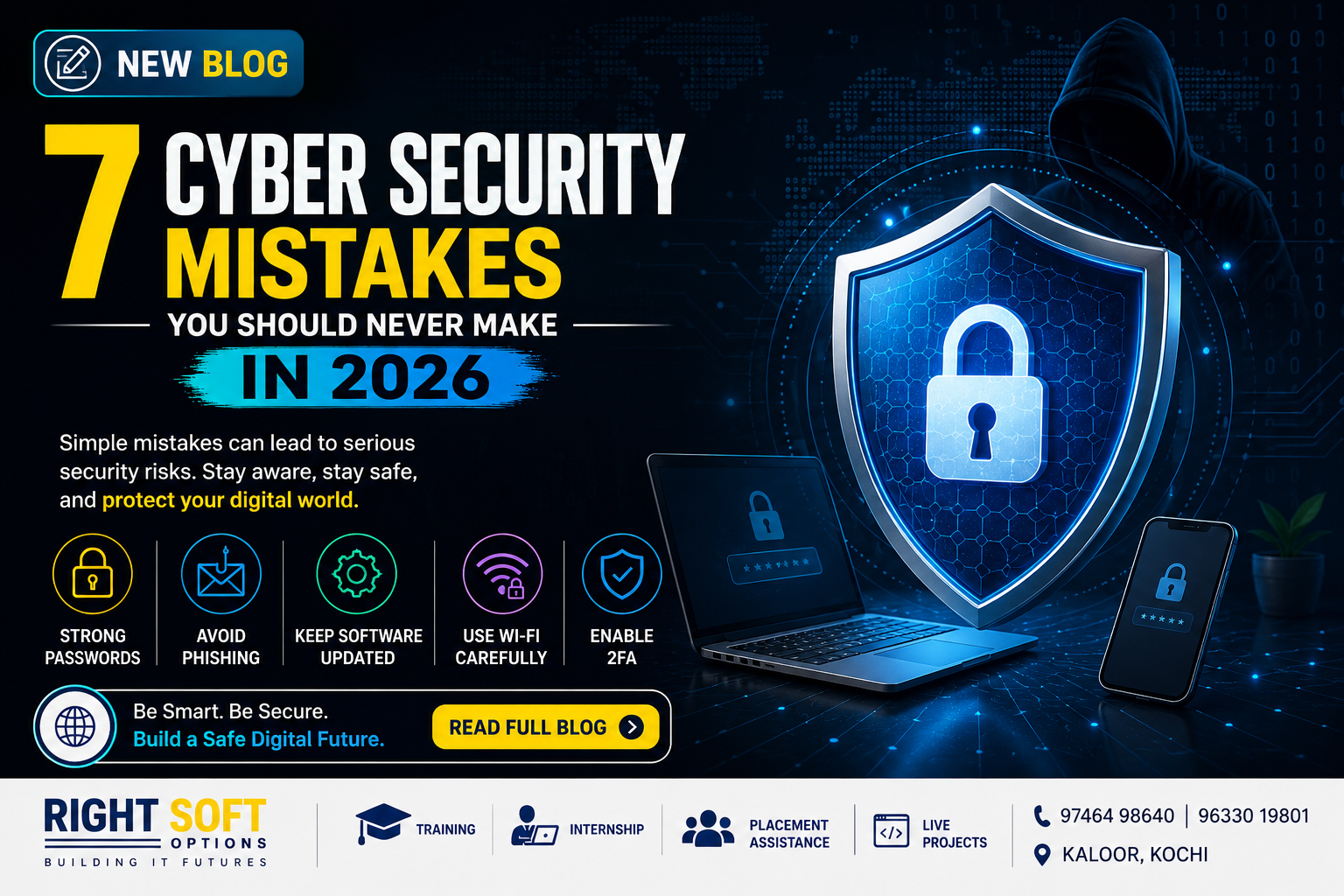
7 Cyber Security Mistakes You Should Never Make in 2026
The internet has become an essential part of our everyday lives. From online banking and shopping to social media, education, and professional communication, we share a huge amount of personal information online. But as technology continues to evolve, cyber threats are becoming more sophisticated too.
Cybercriminals are constantly looking for ways to steal passwords, personal information, financial details, and sensitive data. While advanced security tools can protect you from many threats, simple mistakes made by users can still create serious security risks.
Here are 7 common cyber security mistakes you should avoid in 2026.
1. Using Weak or Easily Guessable Passwords
Using simple passwords such as your name, birthday, phone number, or common words can make your accounts easier to compromise.
A strong password should be long, unique, and difficult to guess. Avoid using the same password for multiple accounts. Using a trusted password manager can also help you create and manage strong passwords securely.
2. Using the Same Password Everywhere
Even if you have a strong password, using it for every account can be dangerous. If one website experiences a data breach and your password is exposed, attackers may try the same credentials on your email, social media, banking, and other accounts.
Use a different password for every important account, especially your email and financial accounts.
3. Clicking on Suspicious Links
Phishing attacks remain one of the most common cyber threats. Attackers may send fake emails, messages, or links that appear to come from banks, companies, delivery services, or even people you know.
Before clicking a link, check the sender, URL, spelling, and overall message carefully. Never provide your password, OTP, or banking information through an unexpected link.
4. Ignoring Software and Security Updates
Many people postpone software updates because they seem unnecessary. However, updates often include important security patches that fix vulnerabilities discovered in applications and operating systems.
Keeping your phone, computer, browser, and applications updated can reduce the risk of attackers exploiting known security weaknesses.
5. Using Public Wi-Fi Without Caution
Public Wi-Fi at cafés, airports, hotels, and other locations can be convenient, but unsecured networks may expose users to security risks.
Avoid accessing highly sensitive accounts through unknown public networks whenever possible. If you need to use public Wi-Fi, make sure your device has updated security software and use secure connections.
6. Not Enabling Two-Factor Authentication
A password alone may not always be enough to protect an account. Two-factor authentication (2FA) adds an additional layer of security by requiring another verification method along with your password.
Whenever 2FA is available, especially for email, social media, cloud storage, and financial accounts, enabling it can significantly improve account security.
7. Sharing Too Much Personal Information Online
Social media makes it easy to share photos, locations, birthdays, workplace details, and other personal information. However, cybercriminals can sometimes use publicly available information to target individuals or attempt social engineering attacks.
Think carefully before sharing personal details publicly and regularly review the privacy settings of your social media accounts.
How Can You Stay Safe Online?
Good cyber security starts with simple habits. Use strong and unique passwords, enable two-factor authentication, keep your devices updated, avoid suspicious links, and be careful about the information you share online.
Most importantly, stay aware. Cyber security is not only about advanced technology or complex systems—it is also about making smart decisions when using digital platforms.
Why Learn Cyber Security and Ethical Hacking?
As businesses increasingly depend on digital systems, the need for skilled cyber security professionals continues to grow. Organizations across industries need trained professionals who can identify vulnerabilities, protect sensitive information, monitor threats, and respond to cyber attacks.
Learning Cyber Security and Ethical Hacking can help students and aspiring IT professionals build skills in areas such as network security, vulnerability assessment, penetration testing, ethical hacking, security monitoring, and cyber threat awareness.
If you are interested in building a career in cyber security, gaining practical knowledge through structured Cyber Security Training and hands-on projects can be an important step toward becoming job-ready.
Start Building Your Cyber Security Skills
Cyber threats are evolving every day, and staying protected requires continuous learning and awareness. Whether you want to improve your personal online security or build a professional career in cyber security, understanding the fundamentals is the first step.
Learn today. Protect tomorrow. Build a future in Cyber Security.
At Right Soft Options, students can develop practical skills through career-oriented training, hands-on learning, and real-world projects designed to prepare them for the evolving technology industry.
